This deck is designed for landscape. Rotate your phone for the best view.
What Developers Need to Do in ASPICE projects
ASPICE is NOT:
That is not about MISRA-C, AUTOSAR...
No required UML or template.
Tools are your choice.
It does not mandate unit test tools.
Process does not equal zero defects.
It is a process assessment.
It is continuous, every sprint and release.
Origin: ISO/IEC 15504 -> ISO/IEC 330xx series.
Process capability, systematic evidence, predictability.
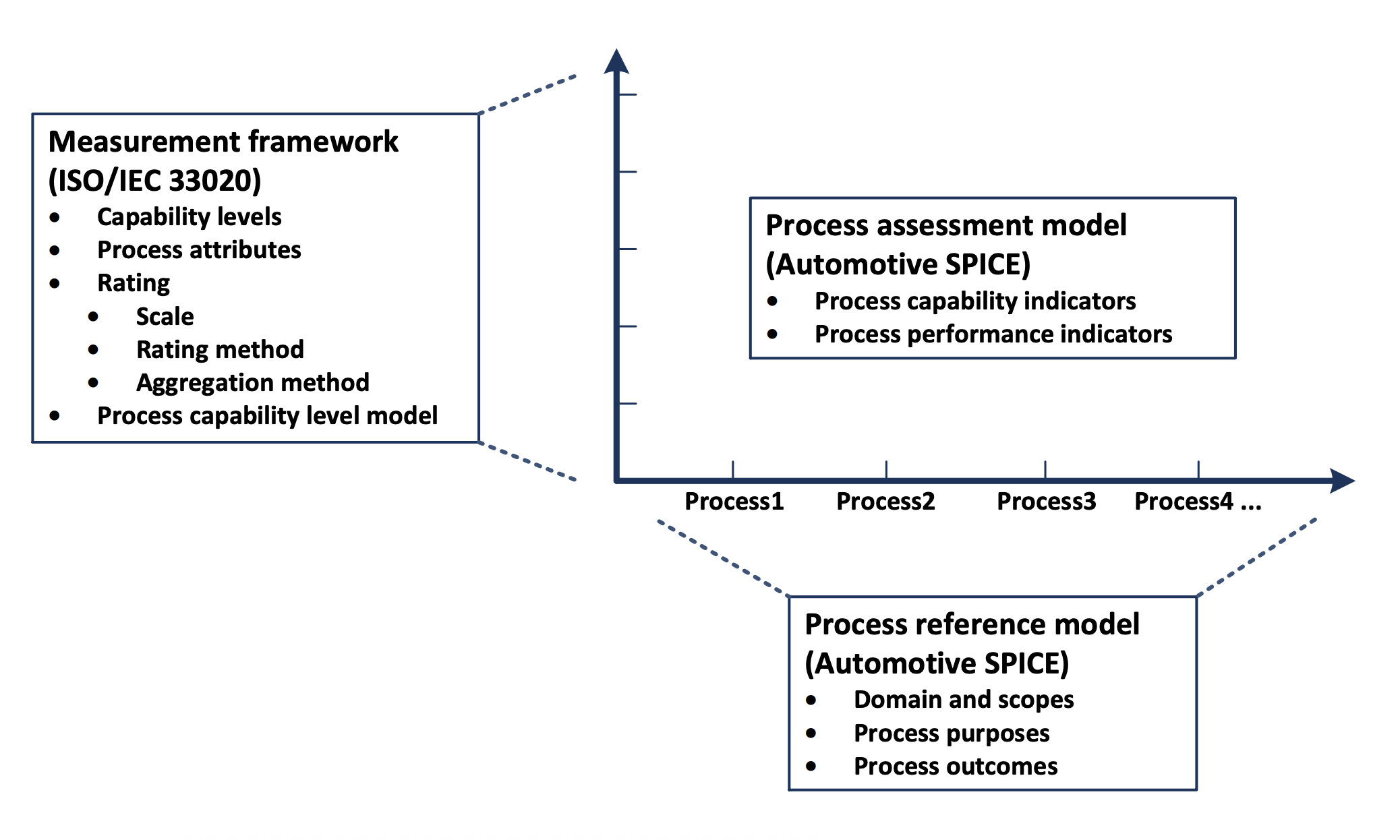
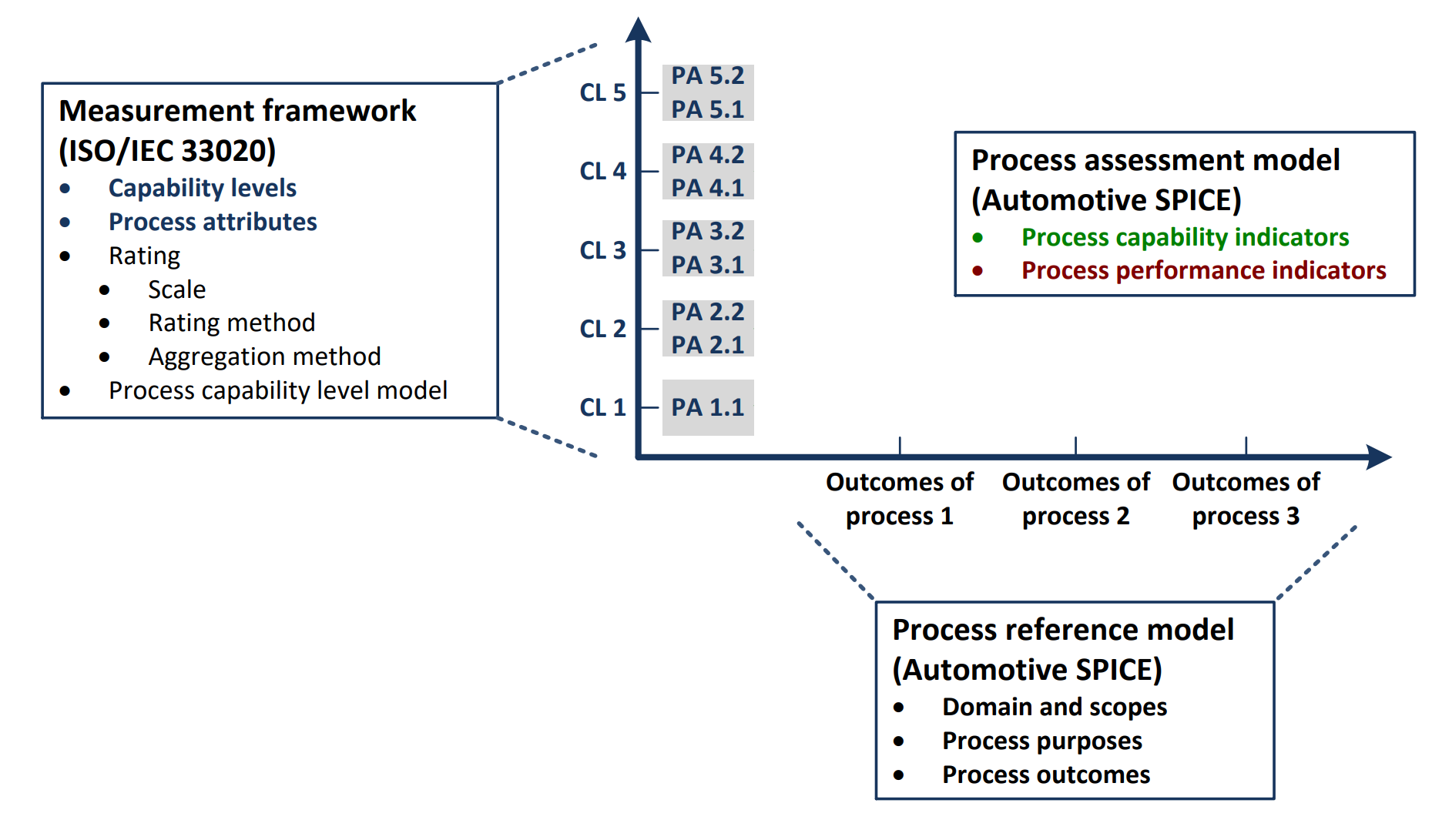
Process assessment framework for Automotive Software.
PRM defines what to do.
PAM rates how well you do it.
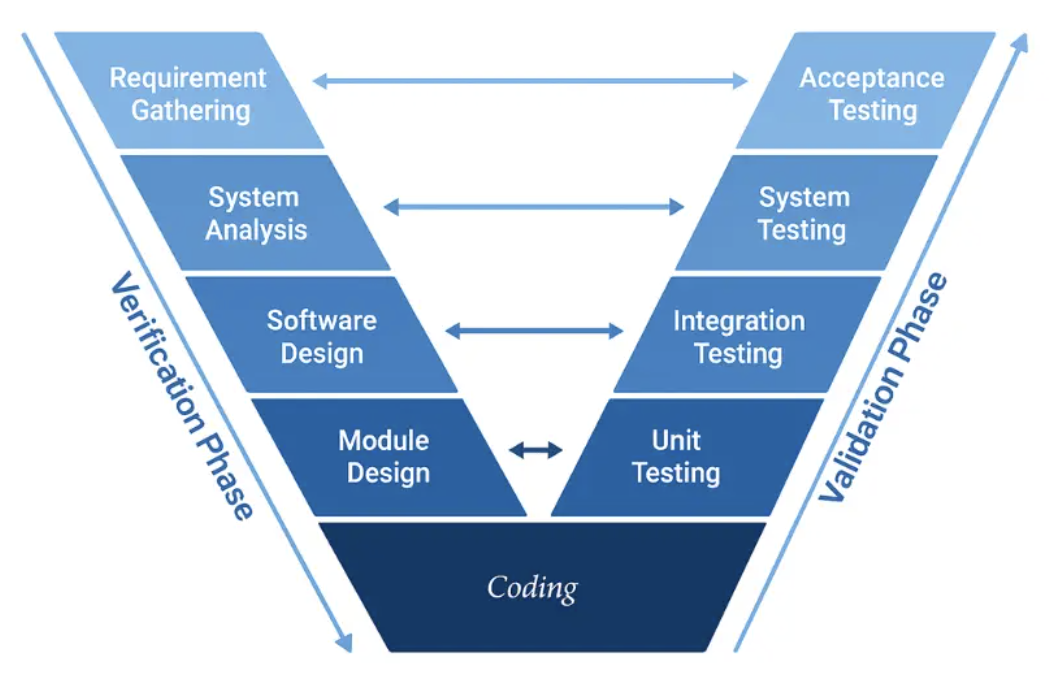
Development activities are paired with early test planning.
Each requirement -> design -> code -> test.
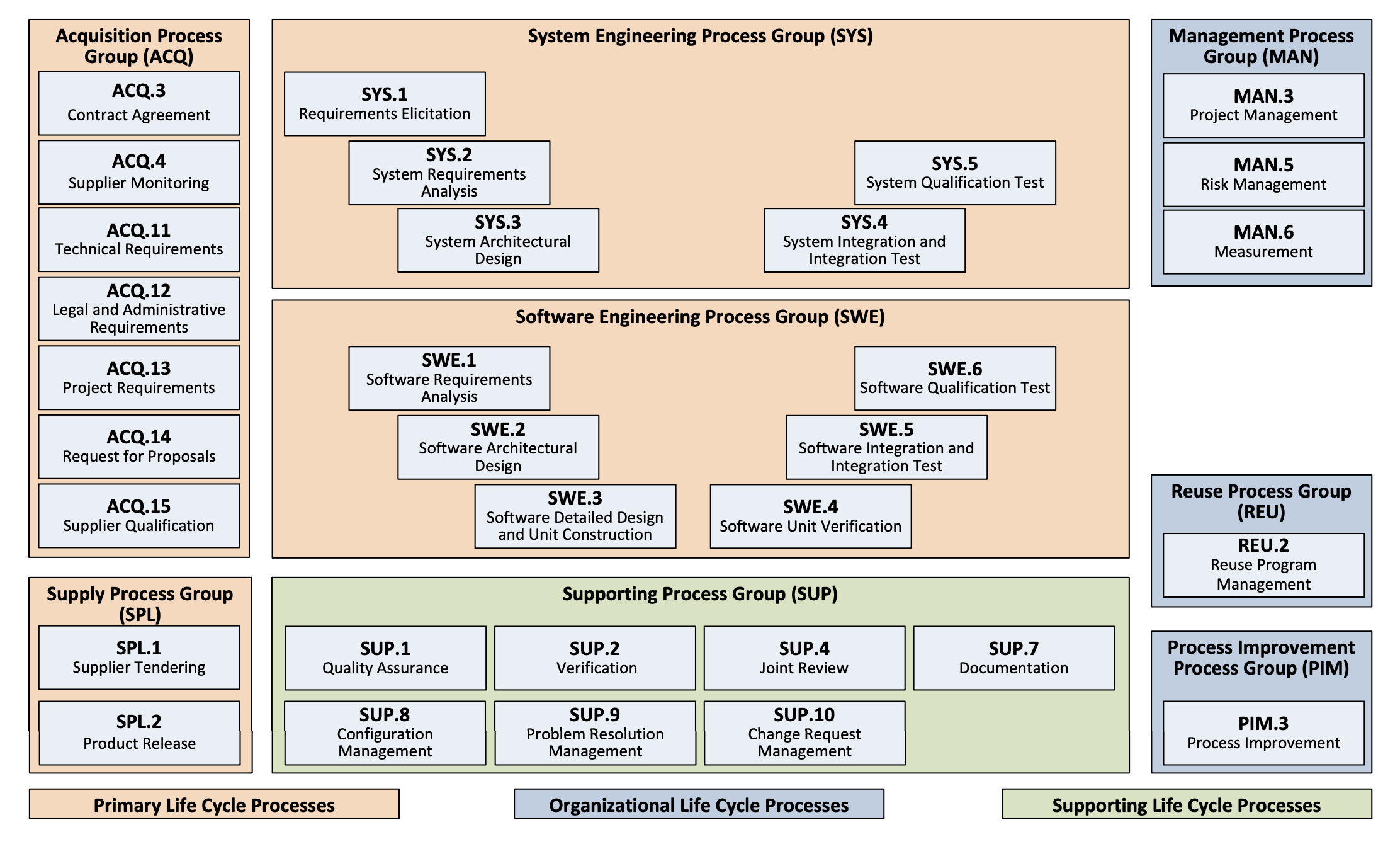
Primary, Organizational, Supporting life cycle processes.
SYS + SWE implement the V-model step by step.
It includes hardware, electronics, and integration.
SYS is system-level (HW + SW); SWE is software-only.
Gather stakeholder needs and establish baseline.
Agreed stakeholder requirements with change control.
Transform stakeholder needs into detailed system requirements.
Detailed, traceable, testable system requirements.
Define system architecture and allocate requirements.
System architecture with allocated requirements and defined interfaces.
Integrate system items and verify architectural design.
Integrated system verified against architectural design.
Verify complete system against system requirements.
System ready for delivery, verified against all requirements.
Transform system requirements into software requirements.
Detailed, traceable, testable software requirements.
Define software architecture and allocate requirements.
Software architecture with allocated requirements and interfaces.
Design software units and implement them.
Detailed design plus implemented and documented units.
Verify units against detailed design and requirements.
Verified units with evidence of compliance.
Integrate units into complete software and verify architecture.
Integrated software verified against architectural design.
Verify complete software against software requirements.
Software ready for system integration, verified against all requirements.
| Level | Description |
|---|---|
| Level 0: Incomplete process | Not implemented or fails; little or no systematic achievement. |
| Level 1: Performed process | Process achieves its purpose. |
| Level 2: Managed process | Planned, monitored, and adjusted; work products controlled. |
| Level 3: Established process | Defined process in use; capable of achieving outcomes. |
| Level 4: Predictable process | Operates within defined limits; measured and quantitatively controlled. |
| Level 5: Innovating process | Continuously improved to meet organizational change. |
| Capability Level | Attribute ID | Process Attributes |
|---|---|---|
| Level 0: Incomplete process | - | - |
| Level 1: Performed process | PA 1.1 | Process performance process attribute |
| Level 2: Managed process | PA 2.1 | Performance management process attribute |
| PA 2.2 | Work product management process attribute | |
| Level 3: Established process | PA 3.1 | Process definition process attribute |
| PA 3.2 | Process deployment process attribute | |
| Level 4: Predictable process | PA 4.1 | Quantitative analysis process attribute |
| PA 4.2 | Quantitative control process attribute | |
| Level 5: Innovating process | PA 5.1 | Process innovation process attribute |
| PA 5.2 | Process innovation implementation process attribute |
| Rating | Achievement Level | Description | Achievement Range |
|---|---|---|---|
| N | Not achieved | There is little or no evidence of achievement of the defined process attribute in the assessed process. | 0% to 15% |
| P | Partially achieved | There is some evidence of an approach to, and some achievement of, the defined process attribute in the assessed process. Some aspects of achievement of the process attribute may be unpredictable. | >15% to 50% |
| L | Largely achieved | There is evidence of a systematic approach to, and significant achievement of, the defined process attribute in the assessed process. Some weaknesses related to this process attribute may exist in the assessed process. | >50% to 85% |
| F | Fully achieved | There is evidence of a complete and systematic approach to, and full achievement of, the defined process attribute in the assessed process. No significant weaknesses related to this process attribute exist in the assessed process. | >85% to 100% |
| Capability Level | Process Attributes (PA) | Required Rating |
|---|---|---|
| Level 1 – Performed | PA 1.1: Process Performance | Largely |
| Level 2 – Managed | PA 1.1: Process Performance | Fully |
| PA 2.1: Performance Management | Largely | |
| PA 2.2: Work Product Management | Largely | |
| Level 3 – Established | PA 1.1: Process Performance | Fully |
| PA 2.1: Performance Management | Fully | |
| PA 2.2: Work Product Management | Fully | |
| PA 3.1: Process Definition | Largely | |
| PA 3.2: Process Deployment | Largely | |
| Level 4 – Predictable | PA 1.1: Process Performance | Fully |
| PA 2.1: Performance Management | Fully | |
| PA 2.2: Work Product Management | Fully | |
| PA 3.1: Process Definition | Fully | |
| PA 3.2: Process Deployment | Fully | |
| PA 4.1: Quantitative Analysis | Largely | |
| PA 4.2: Quantitative Control | Largely | |
| Level 5 – Innovating | PA 1.1: Process Performance | Fully |
| PA 2.1: Performance Management | Fully | |
| PA 2.2: Work Product Management | Fully | |
| PA 3.1: Process Definition | Fully | |
| PA 3.2: Process Deployment | Fully | |
| PA 4.1: Quantitative Analysis | Fully | |
| PA 4.2: Quantitative Control | Fully | |
| PA 5.1: Process Innovation | Largely | |
| PA 5.2: Process Innovation Implementation | Largely |
Requirements -> Design -> Code -> Tests
Tests -> Code -> Design -> Requirements
"A is linked to B"
"A and B actually say the same thing"
| Requirement/Test | TC-010 (Nominal) | TC-011 (UTC) | TC-012 (Fix-loss) | TC-013 (Rate) |
|---|---|---|---|---|
| SWR-001 (pos @1Hz) | X | X | ||
| SWR-002 (UTC <= 1s) | X | X | ||
| SWR-003 (NO_FIX) | X |